Asoj 2083 BSअसोज २०८३· Nepal runs on its own calendar

Eastern Nepal · tea country

Ilam

इलाम

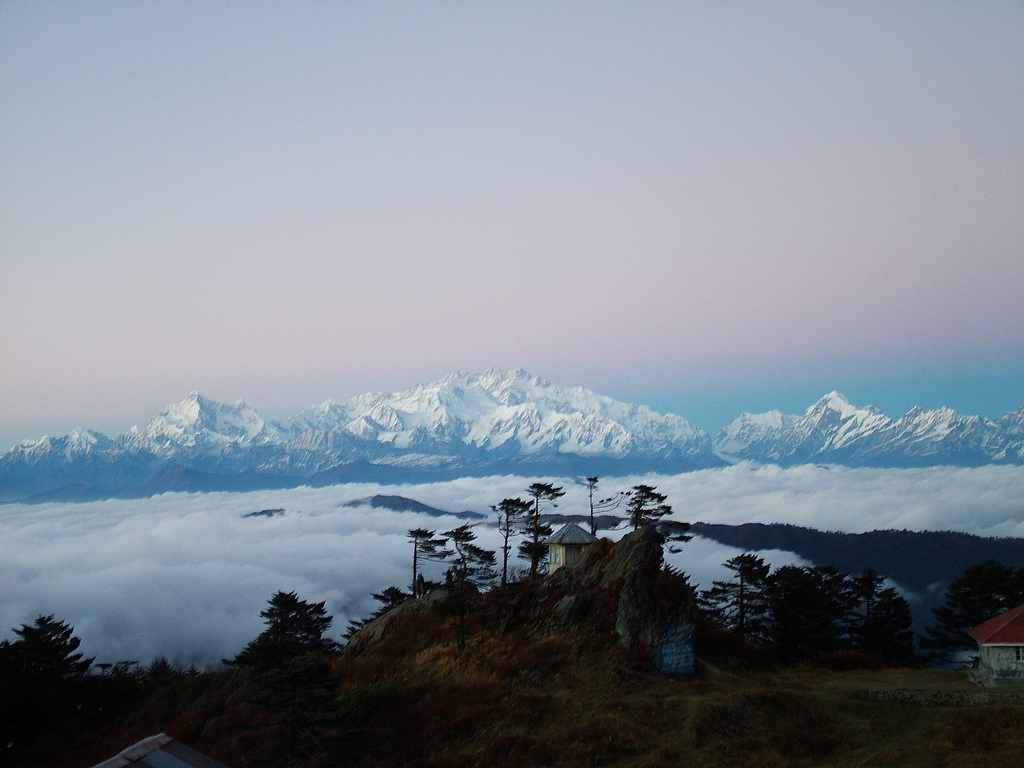
Ilam is the hill town at the heart of Nepal's tea country, about 1,300 m up in the far east. Tea has grown here since the 1860s. Come for the garden walks, the morning mist, the Mai Pokhari wetland and a slow two or three days among Limbu, Rai and Lepcha villages.

  • Stay 2–3 nights
  • Best Mar – May · Oct – Nov
  • पहाडPahad
Ilam
Photo: Saroj Pandey · CC BY-SA 4.0, Wikimedia Commons

The air at Ilam

Altitude1,300 m14.7% of the way to 8,849 m
BeltPahadपहाड · The middle hills: terraces, towns, rhododendron
Each breath86%of the oxygen at sea level
Water boils95.6 °Cso dal takes longer here
vs Kathmandu+0.7 °Ctypical difference by height

Oxygen, boiling point and temperature are worked out from the standard atmosphere for 1,300 m; real days vary with weather.

Ilam bazaar sits on a ridge of the Mahabharat hills, a three to four hour drive up the Mechi Highway from the Terai plains of Jhapa. The town is small: one long main road, a few chowks, a college, tea shops that sell loose leaf by the hundred grams. The tea gardens begin at the edge of the bazaar and run downhill in clipped green rows, with pickers in the bushes from late March to November.

Most people who come here are Nepali and Indian families on a weekend from the plains, and on Saturdays the viewpoints and tea shops fill up. Fewer foreigners make the trip, which is part of the pleasure. On a weekday you can walk out of your guesthouse into the Ilam Tea Estate before breakfast, watch the mist (kuhiro) burn off the slopes, and be the only visitor in the rows, with nothing but the pickers' voices and the bells of the cattle below.

Ilam works as a base for the wider tea country: Kanyam and Fikkal to the south-east, Mai Pokhari and the long road to Sandakpur to the north, and the villages of cardamom and ginger farmers in between. Give it two nights at least. A third lets you add a farm visit, a walk to a cardamom plot, a homestay night, or a day on the ridge with nothing to do but drink tea and watch the cloud move through the valleys.

Why go

Ilam Tea Estate at first light

The old estate starts where the bazaar ends. Walk the paths between the rows at 6 am, when the pickers arrive and mist hangs in the valley below. The garden is a working estate, so keep to the paths and ask before photographing the pickers.

Mai Pokhari wetland

A small, sacred lake at about 2,100 m, surrounded by forest and listed as a Ramsar wetland since 2008. Hindu and Buddhist pilgrims both come here. It is roughly 1.5–2 hours by jeep from Ilam bazaar on a rough road.

Tea tasting in the bazaar

Shops along the main road sell orthodox Ilam tea by weight: first flush from late March, second flush from May, autumn flush in October–November. Ask to taste two or three side by side before you buy.

Ridge walks above town

Footpaths leave the bazaar in every direction, past cardamom plots, cowsheds and terraced maize. A half-day loop with a local guide shows how a hill farm in Ilam actually works, from milking and fodder cutting to ginger and broom grass.

A base for the tea country

From Ilam you can reach Kanyam and Fikkal in about 1.5 hours, Mai Pokhari in 2, and the Sandakpur ridge in a long jeep day. Two or three nights here cover the best of it without rushing.

१The story of Ilam

A tea town on the Darjeeling side of the hills

Ilam bazaar was set up in 1818 as the seat of the Ilam gauda, the administrative post the Gorkhali state used to govern this far corner of the new kingdom. Before that, the hills belonged to the Limbu chiefs of Limbuwan, whose traditional territories stretched east of the Arun to the Mechi river on the Sikkim and Darjeeling border. Many of the old Limbu place names survive in the villages around town, and Limbu families still farm the slopes their ancestors held.

Tea came in the 1860s. Ilam's tea history is usually dated to 1863, and a factory followed a few years later. The hills here share their soil, slope and mist with Darjeeling across the border, and for much of the 20th century green leaf from Nepal's estates was sold over the border to Indian factories. Nepal set up its own Tea Development Corporation in 1966, and private estates and smallholders took a larger share after the National Tea Policy of 2000.

Today Ilam and neighbouring Jhapa grow most of Nepal's tea, with Ilam known for orthodox hill leaf, alongside cardamom, ginger, broom grass, potatoes and the tiny round akabare chilli. People here speak of Ilam's six A's: alu (potato), alain (milk), alainchi (cardamom), aduwa (ginger), amriso (broom grass) and akabare. In 2010 Ilam became the first municipality in Nepal to ban plastic bags in its market, a point of pride you will hear about in the tea shops along the main road.

२The legend
As it is told · इलाम

A story told in Ilam's tea shops says the first tea bushes in Nepal grew from seeds the Chinese emperor sent as a gift to Prime Minister Jung Bahadur Rana, and that some of those seedlings were carried east and planted on these slopes. Historians argue about the details, and some point instead to plants and know-how from Darjeeling next door. Locals tell it either way with a smile and a refill.

३The people

Who lives here

Ilam is mixed. Limbu (Yakthung) families have the oldest roots here, with Rai, Brahmin, Chhetri, Newar, Magar, Gurung, Tamang and Sherpa households alongside. Ilam district is also home to most of Nepal's small Lepcha (Rong) community. Tea work, dairy, cardamom and ginger keep the villages going, and many families have a son or daughter working abroad. Nepali is the common language; Limbu is spoken in many homes.

४Words you will hear
Nepali
चिया बगान
chiya bagan

Tea garden or estate

Nepali
कुहिरो
kuhiro

Mist or fog, the low cloud that fills Ilam's valleys most mornings

Limbu
सेवारो
sewaro

Greeting used by Limbu and other Kirat people, like namaste

Every word on this site

५What to eat

Akabare khursani achar

A pickle of Ilam's small, round, very hot akabare chilli, often mixed with lemon, mustard oil and timur pepper. Every kitchen in town makes its own. Ask for it with dal bhat at any bhojanalaya on the main road, and buy a jar in the bazaar to take home.

६Few people know

Things most guides leave out

Ilam bazaar was established in 1818 as the headquarters of the Ilam gauda, an administrative post of the Gorkhali state, more than forty years before tea was planted here.

Wikipedia: Ilam Municipality

In 2010 Ilam municipality became the first in Nepal to ban plastic bags from its market, an early local step that other towns later followed. Shopkeepers in the bazaar still mention it with pride.

Wikipedia: Ilam Municipality

Mai Pokhari, a small lake and wetland at about 2,100 m north of Ilam bazaar, was designated a Ramsar wetland of international importance in October 2008.

Wikipedia: Mai Pokhari; Ramsar Sites Information Service

Untold Nepal, region by region

Getting there

How to reach Ilam

Air

Fly Kathmandu to Bhadrapur (about 45–50 minutes, several flights a day in season). From Bhadrapur it is roughly 100 km and 3–4 hours by car to Ilam via Birtamod or Charali and the Mechi Highway. Flight schedules change by season; check current status before you travel.

Road

Overnight buses run from Kathmandu to Ilam, about 600 km and 14–16 hours via the East–West Highway. A private car takes two days if you stop on the way. From the Terai, the Mechi Highway climbs 74 km from the East–West Highway to Ilam bazaar.

Where to stay

Ilam bazaar has simple hotels and family guesthouses along the main road and near the tea estate; expect clean rooms, hot water by geyser or bucket, and dal bhat downstairs. Several homestays operate in the villages around town and in the tea gardens, where you sleep in a family house and eat what they eat. There are no international chain hotels in Ilam. We book rooms that we have checked recently, close enough to the estate to walk in at dawn.

Local tips

  • Bring a warm layer even in May; evenings at 1,300 m are cool and the mist can be damp.
  • The tea estates are working farms, so ask before photographing pickers and do not pick leaves.
  • Buy tea in small packs from two or three shops and compare; prices and quality vary more than labels suggest.
  • Saturdays and Nepali holidays bring families up from the Terai, so book rooms ahead for those dates.
  • Carry cash in Nepali rupees; ATMs exist in the bazaar but can run dry on holiday weekends.

On the map

Ilam and what is near it

Map of Ilam, Kanyam, Sandakpur, PathibharaIndiaChinaBhutanBangladeshNepalKoshiIlam1IlamKanyam2KanyamSandakpur3SandakpurPathibhara4Pathibhara50 kmN
  1. 1Ilam
  2. 2Kanyam
  3. 3Sandakpur
  4. 4Pathibhara
Drawn by Book Nepal Trip from Natural Earth outlines (public domain). International borders as depicted by Nepal. Rivers: Karnali, Gandaki and Koshi systems. Not for navigation.

Questions

Ilam: what travellers ask

Is Ilam worth visiting?

Yes, if you like slow travel. Ilam is Nepal's main tea country, with garden walks, morning mist, cheap good tea and very few foreign tourists. It is not a trekking hub or a heritage town. Two or three nights here, with a day at Kanyam and one at Mai Pokhari, is a calm counterweight to Kathmandu and the big treks.

How do I get from Kathmandu to Ilam?

The quickest way is a 45–50 minute flight from Kathmandu to Bhadrapur, then about 100 km and 3–4 hours by car up the Mechi Highway. By road, overnight buses take 14–16 hours. A private car is best split over two days. Check current status of flights and roads before you travel.

What is the best time to visit Ilam?

October to December gives the clearest views and fresh autumn tea. March to May brings first and second flush plucking and rhododendrons on the higher ridges, with more haze. June to September is monsoon: green and quiet, but leeches, landslides and cloud. January and February are cold but often clear.

How many days do I need in Ilam?

Two nights covers Ilam Tea Estate, the bazaar and a half-day trip to Kanyam. Three nights adds Mai Pokhari or a homestay night in a farm village. If you want to reach Sandakpur for the Kanchenjunga and Everest view, plan four to five nights in the Ilam area.

Can I see Mount Everest from Ilam?

Not from Ilam bazaar. On clear days you see the Kanchenjunga range to the north from ridges above town. For Everest, Lhotse, Makalu and Kanchenjunga together you need to go up to Sandakpur, on the Singalila ridge at 3,636 m, a long jeep day north of Ilam.

Is Ilam safe for tourists?

Ilam is a quiet, friendly hill town and we consider it safe for travellers, including solo women. The main risks are road ones: narrow hill roads, monsoon landslides and night driving. We avoid driving after dark and plan around the weather. Usual sense with valuables applies in buses and bazaars.

Do I need a permit to visit Ilam?

No special permit is needed for Ilam town, the tea gardens or Kanyam. Ilam is not a restricted area. A small local fee is sometimes collected at sites such as Mai Pokhari. Carry your passport, as some hotels and checkposts record foreign guests.

What food is Ilam known for?

Ilam is known for its tea, the small round akabare chilli, milk and dairy products including chhurpi cheese, cardamom and ginger. Try akabare achar with dal bhat in the bazaar, and buy orthodox tea by weight from the shops on the main road.

Where should I stay in Ilam?

Stay in the bazaar close to Ilam Tea Estate so you can walk into the gardens at dawn. Choose from simple hotels and family guesthouses there, or spend a night in a village homestay outside town. There are no large resort hotels; comfort is basic but clean.

Plan with a local planner

Tell us your height, we will find the trail

Easy hills or a 5,000 m pass, a week or a month: three short questions and a planner sends a first plan, with the sleeping height of every night and an itemised price.

  1. १Tell us where, when and how high you want to go
  2. २Get a first plan and an itemised price within one working day
  3. ३Change anything until it fits. Pay a deposit only when you book
Plan my Nepal trip