Asoj 2083 BSअसोज २०८३· Nepal runs on its own calendar

Langtang & Manaslu · monastery

Kyanjin Gompa

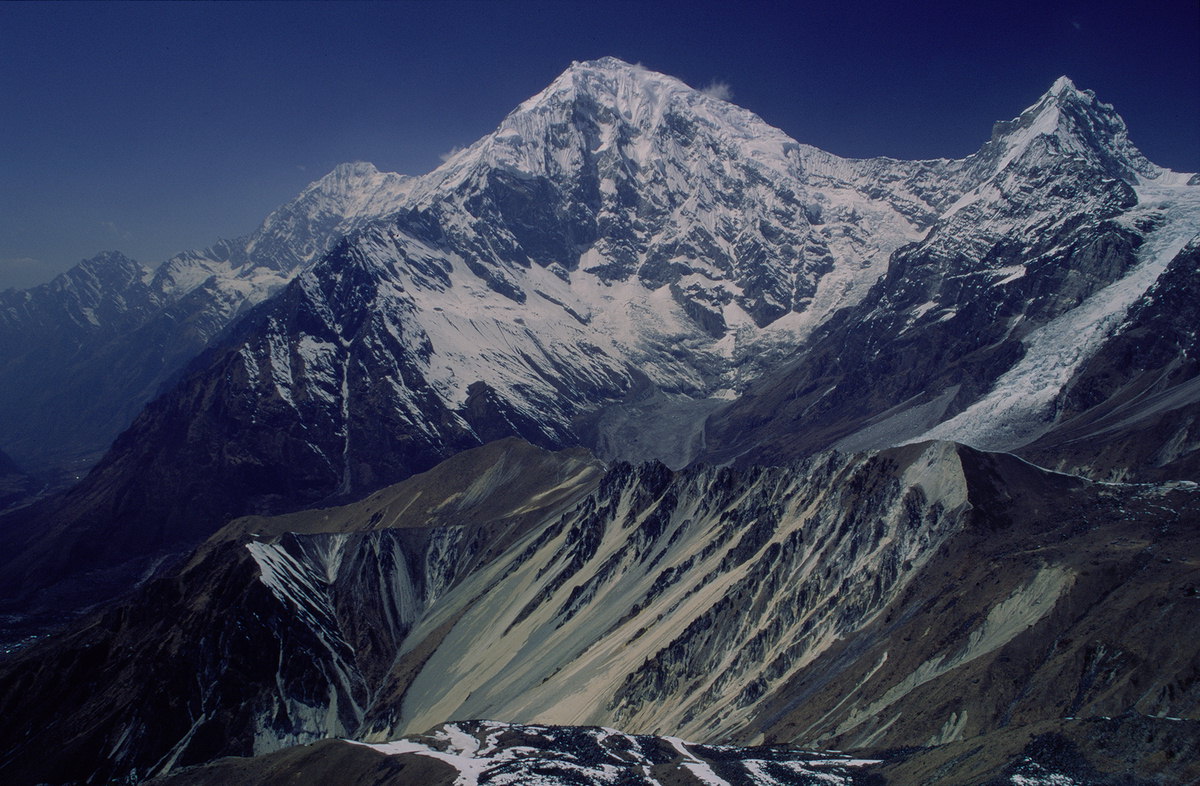
Kyanjin Gompa, at about 3,870 m, is the last village and turnaround point of the Langtang Valley trek, three days above Syabrubesi. It has a small monastery, a cheese factory begun with Swiss help in the 1950s, and day climbs to Kyanjin Ri and Tserko Ri for close views of Langtang Lirung.

  • Stay 2 nights
  • Best Mar – May · Oct – Nov
  • लेकLekh
Kyanjin Gompa
Photo: Bcd4e6 · CC BY-SA 4.0, Wikimedia Commons

The air at Kyanjin Gompa

Altitude3,870 m43.7% of the way to 8,849 m
BeltLekhलेक · High hills: pasture, pine, the last fields
Each breath62%of the oxygen at sea level
Water boils86.8 °Cso dal takes longer here
vs Kathmandu-16.1 °Ctypical difference by height

Oxygen, boiling point and temperature are worked out from the standard atmosphere for 3,870 m; real days vary with weather.

Kyanjin Gompa sits on a broad glacial terrace at the upper end of the Langtang Valley, at about 3,870 m. The village takes its name from its small Buddhist monastery, and it is where almost every Langtang trek turns around. Beyond it the valley continues east toward Langshisa and the glaciers that feed the Langtang Khola, but lodges stop here. Ice falls and moraine walls surround the village on three sides.

Most trekkers spend two nights here: one to arrive and rest, one after a dawn climb to Kyanjin Ri (about 4,600 m to the lower summit) or the longer climb to Tserko Ri, near 5,000 m. Both give views straight across to Langtang Lirung, over 7,200 m, and the glaciers on its flank. The village itself has lodges, bakeries, a monastery and a cheese factory with a history most visitors do not know.

Kyanjin was shaken by the 2015 earthquake but escaped the avalanche that destroyed Langtang village down the valley. Its lodges recovered quickly and now form the busiest cluster on the trail. The flood of 26 August 2026 did not come down the Langtang Khola, but it cut road access to Syabrubesi; check current status before you travel.

Why go

Kyanjin Ri at sunrise

A steep 2 to 3 hour climb to the lower summit of Kyanjin Ri, about 4,600 m, gives a full view of Langtang Lirung, its glaciers and the upper valley. Go early before cloud builds; come down for a late breakfast.

Tserko Ri

The bigger day: a long climb to around 4,980 m on Tserko Ri, with views east to the Tibetan border peaks and south across the valley. It takes 7 to 9 hours return and needs good acclimatisation and settled weather.

The cheese factory

Visit the small cheese factory started with Swiss help in the 1950s, see the presses and ageing rooms when they are working, and buy a block of firm yak cheese to carry down.

Kyanjin monastery

The village gompa is small and simple, with prayer flags strung to the ridges and a view straight up the valley. Visit with your guide, walk clockwise and leave a small donation for the butter lamps.

Upper valley walk to Langshisa

A long day hike east along the valley floor toward Langshisa Kharka, about 4,100 m, past moraine and yak pastures with glaciers spilling off the peaks. Few trekkers go this far.

१The story of Kyanjin Gompa

Cheese, yaks and a Swiss idea in the 1950s

In the 1950s Nepal had only just opened to the outside world, and Swiss development workers were looking for ways to help mountain herders earn more from their animals. In Langtang, Werner Schulthess introduced Swiss-style cheese-making, using the milk of yaks and nak and of yak-cow crossbreeds. The idea was simple: milk spoils, but hard cheese keeps and can be carried down to Kathmandu.

The cheese factory at Kyanjin is the best-known result. Herders bring milk from the summer pastures, and the cheese is pressed and aged in a simple building in the village. The work has continued for decades, under Nepali management, and Langtang cheese, a firm, mild yellow cheese, became something of a brand in Kathmandu shops and bakeries. Production is seasonal and depends on the herds and pastures.

Kyanjin's other life is religious. The small gompa, rebuilt after earthquake damage, is a village monastery of the Tibetan Buddhist tradition followed by the Langtangpa. Pilgrims and herders circle it, prayer flags run from its roof to the ridges, and on festival days the village gathers here. For trekkers, it is the quiet place to sit at the end of the valley before turning back.
२The legend
As it is told

The Langtangpa regard Langtang Lirung, the great mountain above Kyanjin, as their yul-lha, the local god who protects the valley and its herds. Offerings of juniper smoke and prayer flags on the ridges around Kyanjin are made to keep the mountain god content. In Langtang tradition the whole valley is also a beyul, a hidden land blessed by Guru Padmasambhava.

३The people

Who lives here

Kyanjin's residents are Langtangpa, Tibetan-speaking Buddhist herders whose families graze yaks and nak on the high pastures and have run lodges here since trekking began in the 1970s. Many spend winter lower in the valley or in Kathmandu and return for the seasons. Staff in lodges and the cheese factory come from Langtang villages and wider Rasuwa.

४Words you will hear
Tibetan
འབྲི་
dri

Female yak, called nak in English; the yak is the male. Milk comes from the dri

Nepali
छुर्पी
chhurpi

Hard dried cheese chewed for hours, made from yak or cow milk

Nepali
खर्क
kharka

High summer pasture with herders' huts

Every word on this site

५What to eat

Langtang yak cheese

Firm, mild yellow cheese made at the Kyanjin factory from yak and nak milk. Buy a small block at the factory or in lodges, eat it on Tibetan bread or a yak cheese pizza at one of Kyanjin's bakeries, and carry some down for the trail. It keeps well in the cold.

६Few people know

Things most guides leave out

Swiss-style cheese-making was introduced to Langtang in the 1950s by Werner Schulthess, and cheese is still produced in the valley today, making it one of Nepal's oldest mountain dairy projects.

Wikipedia: Langtang

Around 2000, with support from the United Nations Development Programme, some Langtang teahouses were fitted with solar panels so trekkers could have hot showers without burning more firewood.

Wikipedia: Langtang

The Tsergo Ri landslide, near the peak trekkers climb from Kyanjin, is one of the largest known mass movements on Earth. It is prehistoric and its debris shapes much of the upper valley.

Wikipedia: Tsergo Ri

Untold Nepal, region by region

Getting there

How to reach Kyanjin Gompa

On foot

Three days from Syabrubesi via Lama Hotel and Langtang village, about 32 km and 2,400 m of ascent. Two days down.

Air

Charter helicopters land at Kyanjin, used for returns, rescues and short on time trips. Flying straight in from Kathmandu without acclimatisation is not advised.

Road

Nearest road is at Syabrubesi, about 120 km from Kathmandu, badly damaged by the 26 August 2026 flood. Check current status before you travel.

Where to stay

Kyanjin Gompa has the largest group of lodges in the Langtang Valley, family-run by Langtangpa households: twin rooms, some with attached bathrooms, solar hot showers, stove-heated dining rooms and bakeries. Rooms are basic and cold at night, so bring a sleeping bag rated to minus 10 °C between October and April. Lodges near the monastery have the best morning views. We confirm which lodges are open each season.

Local tips

  • Spend two nights here and climb Kyanjin Ri on the second morning, not the afternoon you arrive.
  • Start Kyanjin Ri by 5.30 am in autumn; clouds often close in by 10 am.
  • Charge devices in lodges for a small fee; power can be weak in cloudy weeks.
  • Turn back on Tserko Ri if you have a headache or the weather changes; it is a long way above the village.
  • Carry cheese and snacks from Kyanjin for the walk down, as lunch stops are spaced out.

On the map

Kyanjin Gompa and what is near it

Map of Kyanjin Gompa, Langtang Village, Syabrubesi, GosaikundaIndiaChinaNepalKoshiKyanjin Gompa1Kyanjin GompaLangtang Village2Langtang VillageSyabrubesi3SyabrubesiGosaikunda4Gosaikunda50 kmN
  1. 1Kyanjin Gompa
  2. 2Langtang Village
  3. 3Syabrubesi
  4. 4Gosaikunda
Drawn by Book Nepal Trip from Natural Earth outlines (public domain). International borders as depicted by Nepal. Rivers: Karnali, Gandaki and Koshi systems. Not for navigation.

Questions

Kyanjin Gompa: what travellers ask

How high is Kyanjin Gompa?

About 3,870 m. It is the highest point most Langtang Valley trekkers sleep, so watch for altitude sickness: headache, nausea, poor sleep and loss of appetite. Spend two nights, climb Kyanjin Ri on your rest day and descend if symptoms get worse. Day climbs from here reach about 4,600 m (Kyanjin Ri) and near 5,000 m (Tserko Ri).

How many days does it take to reach Kyanjin Gompa?

Three days on foot from Syabrubesi, via Lama Hotel and Langtang village, and two days back down. Most Langtang Valley treks take 7 to 8 days from Kathmandu to Kathmandu, including the two long drives and a rest day at Kyanjin. Check current road status to Syabrubesi before you travel.

What is there to do at Kyanjin Gompa?

Climb Kyanjin Ri at sunrise, attempt Tserko Ri if acclimatised, visit the monastery and the cheese factory, walk up the valley toward Langshisa Kharka, or simply rest in the sun with yak cheese and coffee from the bakeries. Two nights gives time for one big hike and one quiet morning.

Is there internet at Kyanjin Gompa?

Most lodges offer paid Wi-Fi, and mobile data sometimes works in parts of the village, but signal is unreliable and slows in bad weather. After the August 2026 flood, mobile networks in Rasuwa were disrupted and largely restored by September. Treat Kyanjin as an offline stop and let people at home know.

Can I fly back from Kyanjin Gompa by helicopter?

Yes. Charter helicopters can land at Kyanjin and fly to Kathmandu in well under an hour, weather permitting. Prices are per aircraft, so sharing lowers the cost. Many trekkers walk up and fly down to save two days. When road access to Syabrubesi is closed, flying out may be the practical option.

What is the Langtang cheese factory?

It is a small dairy at Kyanjin that makes firm yellow cheese from yak and nak milk, using Swiss methods introduced to Langtang in the 1950s by Werner Schulthess. Production is seasonal. You can buy cheese at the factory or in lodges, and bakeries in the village serve it on bread and pizza.

Can I continue beyond Kyanjin Gompa?

There are no lodges beyond Kyanjin, but day walks go east to Langshisa Kharka at about 4,100 m. Experienced parties with camping gear and permits sometimes cross high passes to other valleys, but these are serious expeditions. For most trekkers Kyanjin is the turnaround point; Gosaikunda is reached by a separate route.

How cold is Kyanjin Gompa?

In October and November nights drop to about minus 5 to minus 10 °C, with sunny days around 10 to 15 °C. December to February nights can fall below minus 15 °C. April and May are milder. Lodges have quilts but no room heating; bring a warm sleeping bag, down jacket, gloves and hat.

Do I need a guide to reach Kyanjin Gompa?

Under the rule in force since April 2023, foreign trekkers in Nepal's national parks and conservation areas must trek with a licensed guide, and Kyanjin is inside Langtang National Park. Enforcement has varied, so check current status before you travel. A local guide also knows which lodges have reopened after recent disruptions.

Plan with a local planner

Tell us your height, we will find the trail

Easy hills or a 5,000 m pass, a week or a month: three short questions and a planner sends a first plan, with the sleeping height of every night and an itemised price.

  1. १Tell us where, when and how high you want to go
  2. २Get a first plan and an itemised price within one working day
  3. ३Change anything until it fits. Pay a deposit only when you book
Plan my Nepal trip