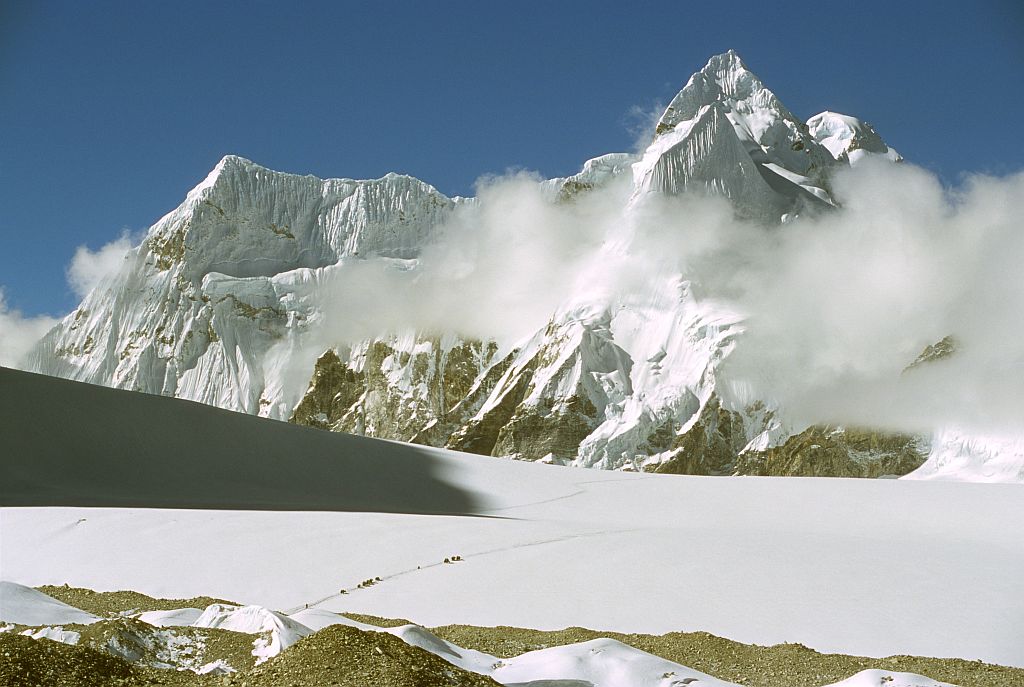
Salt, yaks and the climbers' village
For centuries Thame's wealth came over the Nangpa La, a glacier pass at about 5,700 m on the Tibetan border. Sherpa traders took grain, paper, iron and cloth north and came back with Tibetan salt, wool and yaks, wintering their animals in the Bhote Koshi valley. Thame was the last village with year-round houses on that route, and its families grew skilled at long journeys over ice at altitude.
Those skills found a new use in the 20th century. Thame men carried loads for British expeditions on the Tibetan side of Everest in the 1920s and 1930s, walking from Khumbu to Darjeeling to find work. Tenzing Norgay, who grew up in Thame herding yaks, was one of them. On 29 May 1953 he and Edmund Hillary became the first confirmed climbers on Everest's summit. Generations of Thame climbers have followed, among them Apa Sherpa and Kami Rita Sherpa.
Modern Thame has a small hydro plant, opened in 1995 with 600 kW capacity, that helps light Khumbu. In August 2024 a rock avalanche into two glacial lakes above the village released a flood that swept down the valley and destroyed at least 15 structures. Homes, lodges and fields were lost. The rebuilding goes on, and so does Mani Rimdu in the gompa above.