Spiritual · Khumjung
See the yeti scalp in Khumjung gompa
Khumjung's gompa keeps a revered relic: a tall, conical cap of reddish hide said to be a yeti scalp. Scientists who examined it in 1960 judged it to be serow skin, but to the village it is a sacred object, shown for a donation.

The yeti, called yeti or migoi in Sherpa stories, was part of Khumbu life long before Western newspapers made it famous. Older Sherpas tell of tracks in the snow, of shapes seen at the edges of high pastures, of yaks killed at night. Several Khumbu gompas came to hold relics said to come from yetis. Khumjung's is the best known: a conical scalp of coarse reddish-brown hair kept in a locked case.
In 1960 Hillary's World Book Encyclopedia expedition, which had come partly to investigate the yeti, persuaded the village to lend the scalp. A Khumjung elder, Khunjo Chumbi, travelled with it to Chicago, Paris and London. Scientists concluded the scalp had been moulded from the hide of a serow, a Himalayan goat-antelope. The village had asked for help with a school, which came the following year. The scalp returned home as promised.
Today the caretaker opens the case for visitors who make a small donation to the gompa. Treat it as what it is to the village, a sacred object, and not as a sideshow: ask before photographing, remove your hat, walk clockwise. Inside the gompa the murals of Guru Rinpoche and Khumbu Yul Lha are worth time too.
Good for
Questions
Is the Khumjung yeti scalp real?
It is a real relic, but not of a yeti. When Hillary's 1960 expedition took it abroad for examination, scientists concluded it had been moulded from the skin of a serow, a Himalayan goat-antelope. For the village it remains a sacred object of the gompa, kept and shown with respect. Many Sherpas hold a range of views on the yeti itself.
How much does it cost to see the yeti scalp?
There is no fixed ticket. The caretaker opens the case for visitors who leave a donation for the gompa, usually a few hundred rupees per person. Carry small notes, as change is scarce. If the gompa is locked, your guide can usually find the caretaker in the village.
Where else are yeti relics in Khumbu?
Pangboche gompa was famous for a yeti scalp and a mummified 'yeti hand'. Most of the hand was stolen in 1991, and later tests on a finger taken from it in the 1950s showed it was human. Khumjung's scalp, examined in 1960 and found to be serow hide, is the relic visitors can still see most easily.
Also in Khumjung
More ways to spend the day
 Heritage
Khumjung School and the Himalayan Trust story
See the school Edmund Hillary's Himalayan Trust built at Khumjung in 1961, the first of many schools and clinics in …
 Nature
Tea on the Hotel Everest View terrace
Walk 30 minutes up from Khumjung to the Hotel Everest View at about 3,880 m and drink tea on its …
 Heritage
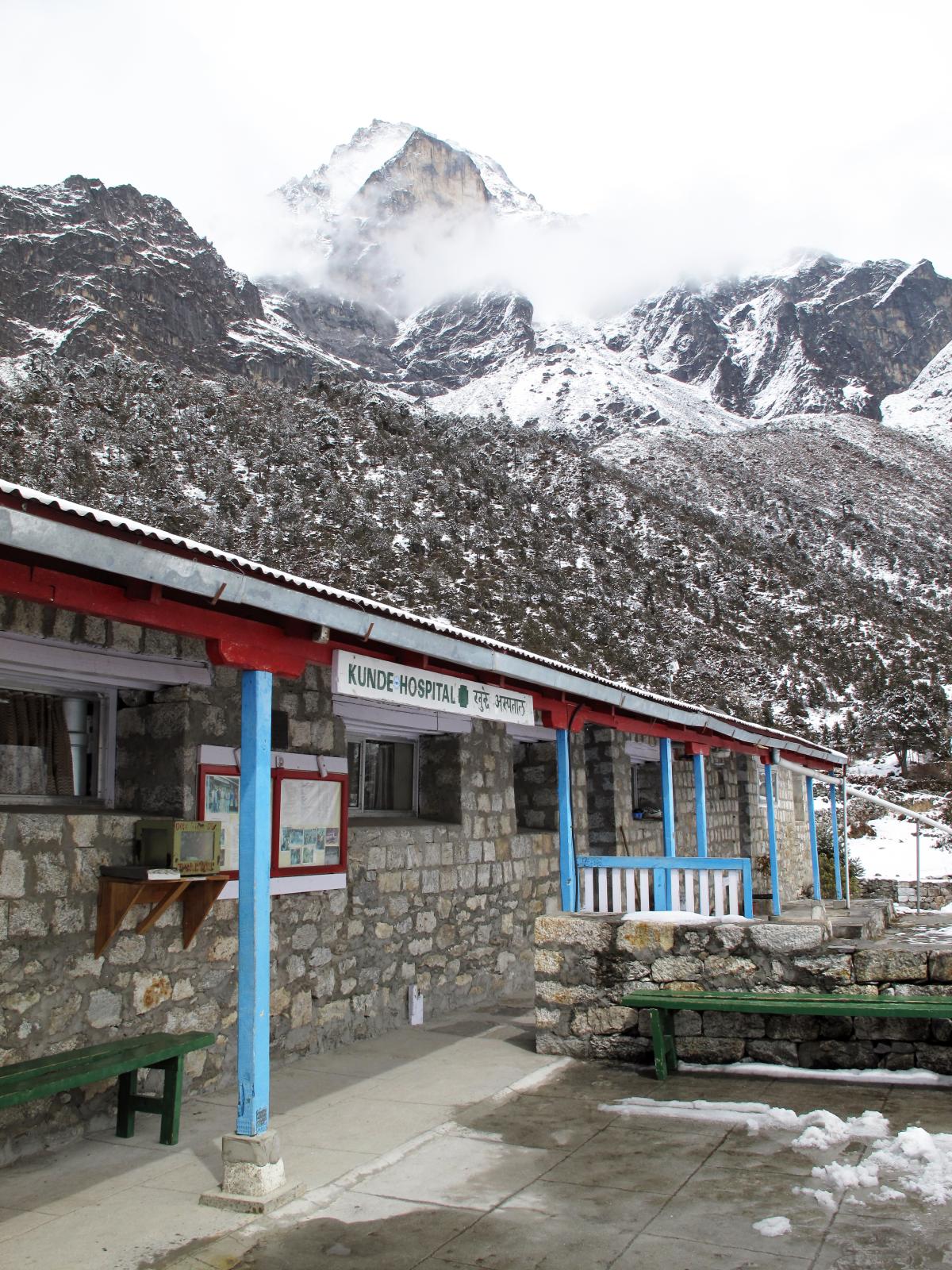
Walk Kunde and the Hillary hospital
Stroll west from Khumjung to its twin village of Kunde, past walled potato fields and chortens to the Kunde hospital …