Trekking · Ghunsa
Acclimatisation hike above Ghunsa
A rest-day hike from Ghunsa up the valley side, gaining a few hundred metres and returning to sleep low, following the climb high, sleep low rule that keeps trekkers safe on the way to Pang Pema.
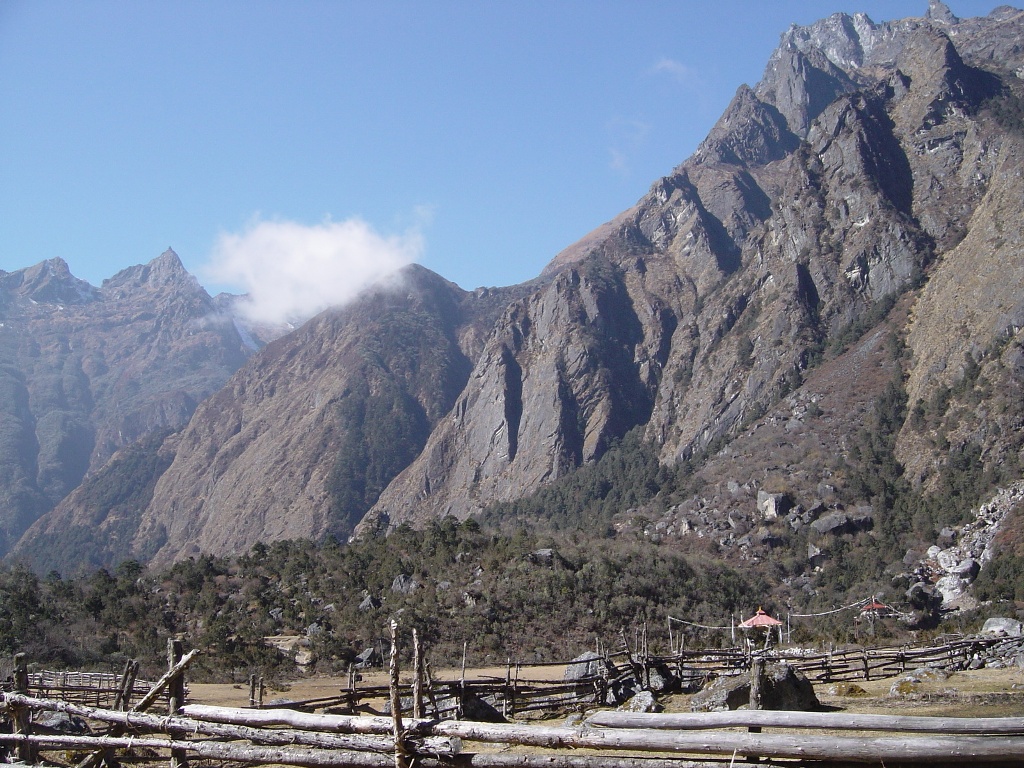

After breakfast we leave Ghunsa and climb steadily up a path on the valley side, through juniper and rhododendron scrub and past summer pasture. The aim is to gain 300–500 m in altitude, spend some time higher up, and then walk back down to sleep in Ghunsa. This simple pattern, climb high and sleep low, is the best way to prepare your body for the nights at Kambachen and Lhonak that follow.
As you climb, the view opens up and down the valley: the village roofs and prayer flags below, the trail to Kambachen heading north, and snow peaks at the head of the valley. Our guide watches the pace and checks how everyone feels, with regular stops for water and snacks. We stay at the high point for half an hour or so, enough for the body to register the height, before turning back.
We are back in time for lunch and a lazy afternoon of washing clothes, reading and resting. The hike makes the next days to Kambachen and Lhonak noticeably easier. In the evening, your guide runs a simple check on everyone, asking about headaches, appetite and sleep, so that any early signs of altitude sickness are caught before the group climbs higher. If anyone needs another day, we take it.
Good for
Questions
Why do we take a rest day in Ghunsa?
Ghunsa, at 3,475 m, is the last major village before the trail climbs to around 4,000 m at Kambachen and over 4,700 m at Lhonak. A rest day with a short hike higher helps your body adjust and lowers the risk of altitude sickness further up.
How hard is the Ghunsa acclimatisation hike?
It is a moderate 3–4 hour hike with a steady climb of 300–500 m and the same back down. Go slowly, drink plenty of water, and tell your guide about any headache, nausea or unusual tiredness.
What if I feel unwell in Ghunsa?
Tell your guide straight away. Mild headaches are common and often ease with rest and water. If symptoms get worse, the safe answer is to descend. Our guides carry a first-aid kit, and evacuation by helicopter can be arranged if needed, which is why insurance is essential.
Also in Ghunsa
More ways to spend the day
 Spiritual
Morning at the Ghunsa gompa
A short, quiet visit to the Buddhist temple above Ghunsa village, with prayer wheels, butter lamps and murals, and a …
HeritageVillage lanes and yak herders of Ghunsa
An afternoon walk through Ghunsa's stone and timber lanes as yaks and herders return, with a guide who explains seasonal …
NatureThe Kanchenjunga Conservation Area story
A conversation over tea about how Ghunsa's valley came to be run by its own people: the 1997 conservation area, …