A river that moves, a buffalo that stayed
The Koshi is famous for changing course. Carrying silt from Everest, Makalu and Kanchenjunga, it has shifted its bed across the plain many times, earning the name 'Sorrow of Bihar' for the floods it sends downstream. In the 1950s Nepal and India agreed to tame it, and between 1958 and 1962 the Koshi Barrage was built near the border, with 56 gates. The river still carries so much sediment that its channels keep shifting from year to year.
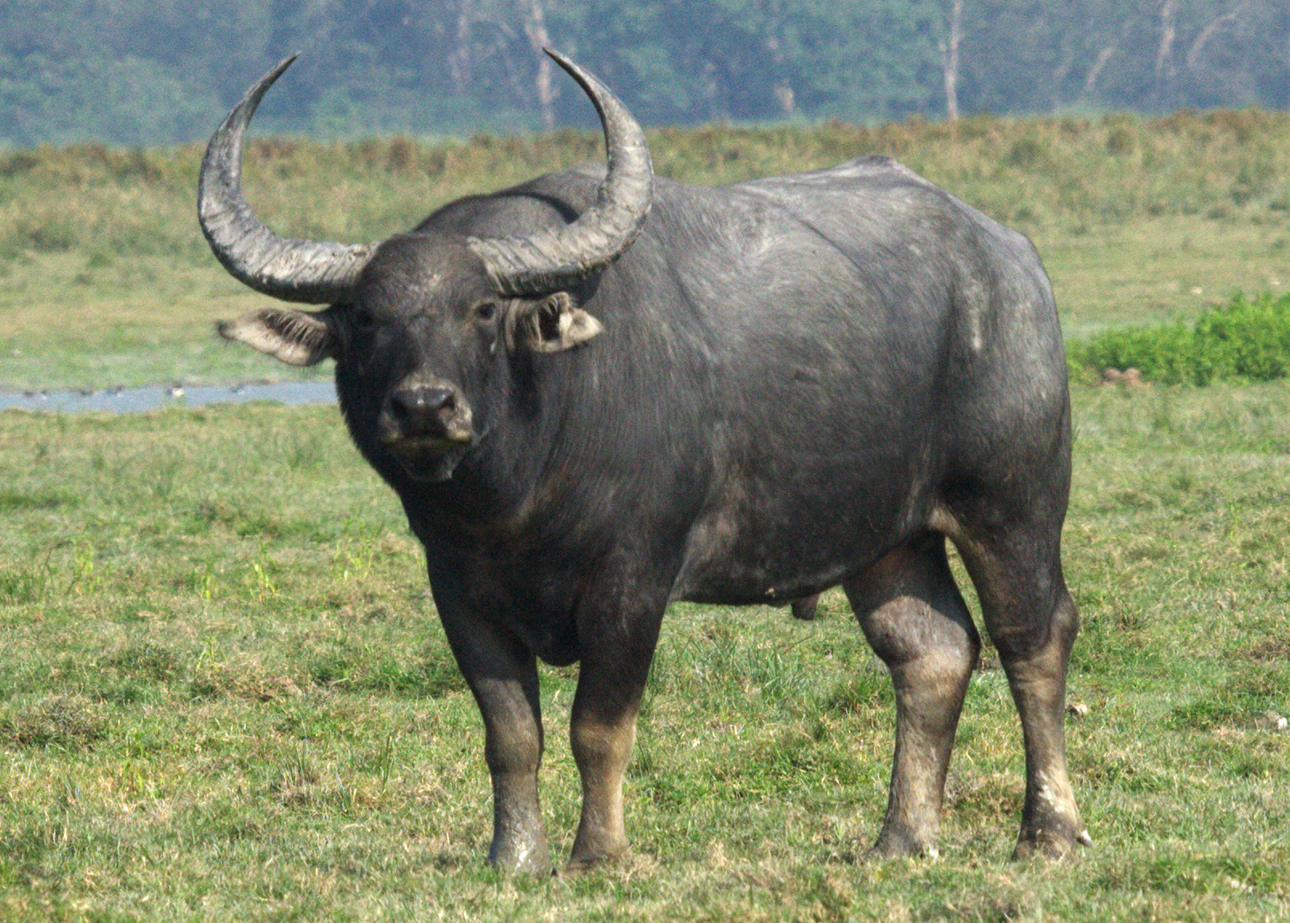
Above the barrage the river still spreads and floods each monsoon, renewing grassland and wetland. That is the habitat the arna needs. By the 1970s hunting, grazing and farming had reduced Nepal's wild water buffalo to a single small herd, and in 1976 the government set up Koshi Tappu Wildlife Reserve to save it. In 1987 the reserve was listed under the Ramsar Convention, and in 2005 it was named an Important Bird Area together with the barrage. It remains the arna's only home in Nepal.
Living beside the reserve is not easy. Wild buffalo and boar raid crops, domestic cattle graze inside, and in August 2008 the Koshi broke its eastern embankment north of the barrage, flooding farmland and displacing tens of thousands of people in Nepal and millions in Bihar. The reserve and its neighbours are still finding a balance between people, river and wildlife. Visitors who come with local guides and stay in local camps help show that the wetland is worth more alive than drained.